The invitation
Someone you’ve just met warmly says, “You must come over sometime,” and you begin waiting for a date to be arranged. Where you come from, words like these are the start of a plan. What they mean here, you have yet to learn.
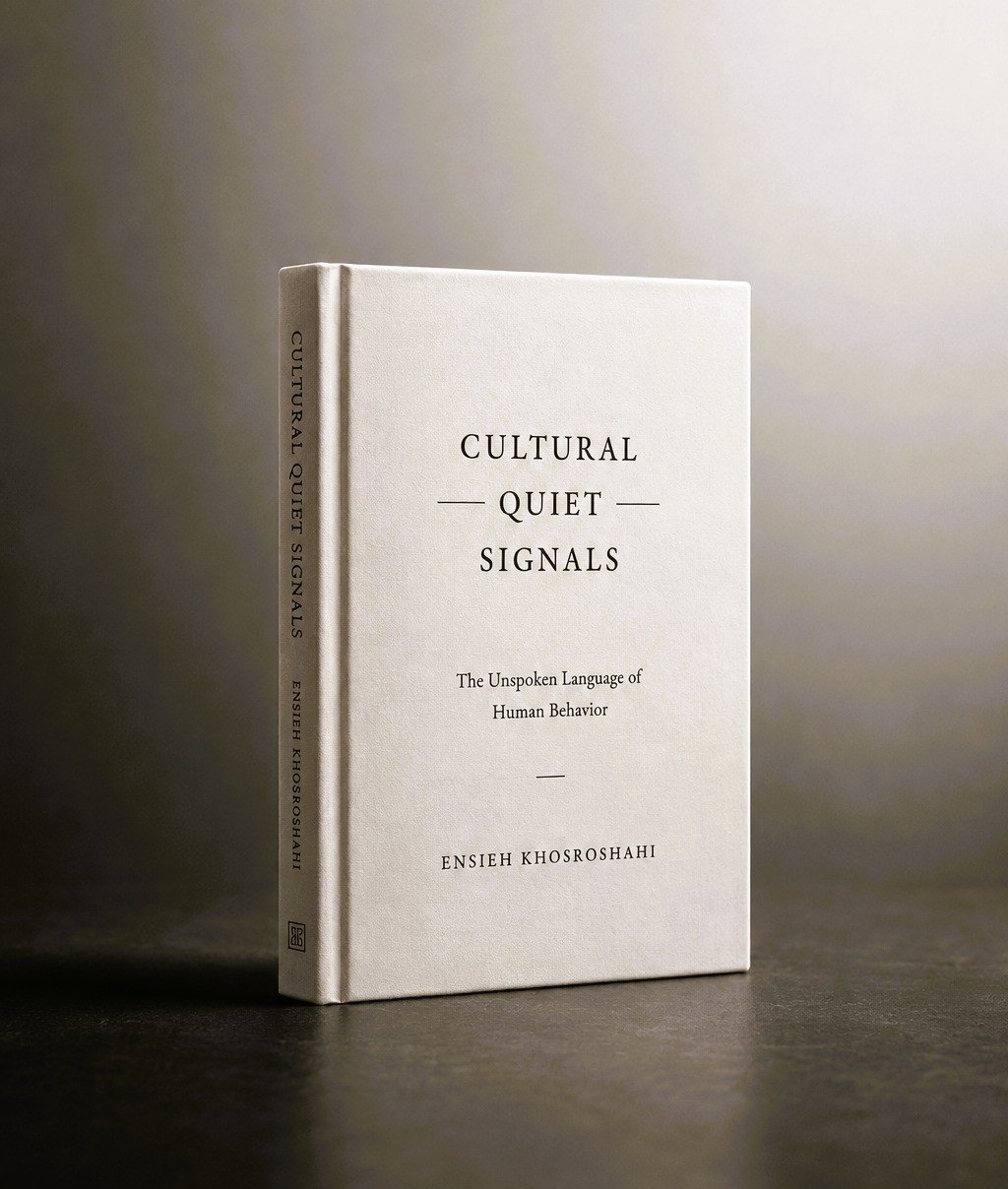
Cultural Quiet Signals · The Unspoken Language of Human Behavior
A literary nonfiction journey through ordinary moments that mean different things to different people.
We read the world through assumptions we rarely question. Living between cultures makes them harder to ignore.
01 / Small moments, different meanings
The invitation
Someone you’ve just met warmly says, “You must come over sometime,” and you begin waiting for a date to be arranged. Where you come from, words like these are the start of a plan. What they mean here, you have yet to learn.
The dinner
You refuse the food, even though you’re hungry. Where you grew up, politeness means declining the first offer, and a good host offers at least twice before you accept. You’ve never had to wonder what happens when no one asks again.
The laughter
Everyone at the table starts laughing at a joke you don’t understand. You laugh along, hoping to belong. Then someone turns to you with a question.
The difference lies in what each person brings to the moment: expectations absorbed so early they feel like the only natural way.
02 / The story on the surface
Written in the second person, Cultural Quiet Signals follows one life across countries and cultures, through unfamiliar rooms, friendships, work, love, distance, and a return to a place once simply called home.
The first departure carries a certainty: somewhere ahead lies the life you have been looking for. At the second, the same person leaves again, changed by everything in between, no longer expecting the next place to keep a promise it never made.
03 / What lies beneath
You offer help and watch someone politely decline. You hear a colleague speak confidently about achievements you were taught to let speak for themselves. You see an expression of care received differently from how it was intended.
These reactions surprise you. Gradually, you become curious about what lies behind them. What makes these ways of behaving feel so natural to the people around you, when your own instincts tell you something different?
The more you try to understand others, the more you begin to recognize your own responses: the expectations you bring into each encounter, the meanings you assign to other people’s actions, and the judgments you form before realizing you have formed them.
You begin to recognize how much of what you considered your own nature was shaped long before you had any reason to question it. What felt like instinct begins to look like inheritance.
Why do I do what I do?
04 / Between the lines
You arrive in a new place and find yourself welcomed into rooms where everyone else seems to know the rhythm. You learn when to speak, when to laugh, how much of yourself to show, and still go home wondering why being included feels so different from belonging.
You carry years of knowledge and experience into a new environment, only to find the work that once spoke for itself suddenly needs a voice. What came naturally before now requires a different way of being seen.
And then there is home. You return to the place you once knew by heart. The key still turns, the door still opens, and everything seems familiar. Yet the ease of belonging no longer comes quite so naturally. Somewhere along the way, the person returning has changed.
You begin to wonder whether home was ever only an address, or whether it is also found wherever you need the least translation of yourself.
You thought you knew the language of love until someone spoke a different one. You thought you recognized warmth until it arrived in an accent you had never learned to hear.
And sometimes, the difference exists between two people who have known each other for years. You understand every word they say, yet still miss what they mean, because each of you brings a different understanding of what those words were supposed to convey.
Read the book
The Unspoken Language of Human Behavior